Maple Pay Exchange
Designing a cross-border financial product from the ground up
I designed Maple Pay Exchange from the ground up, shaping the experience across onboarding, identity verification, wallets, funding, currency exchange, money movement and account management. The goal was to make cross-border finance feel clear and trustworthy while supporting the complexity of a regulated financial product.
Skills
Product Strategy / 0→1 Product Design / UX Design / Interaction Design / Information Architecture / Fintech / Systems Thinking
My Role
I owned the product design experience across Maple Pay Exchange, working from the initial product requirements through the customer journeys and operational surfaces. My work covered the end-to-end financial experience rather than a single feature: onboarding, verification, wallets, funding, exchange, transfers, profile management and the supporting admin experience.
I worked closely with the product and engineering team to translate complex requirements, regulatory constraints and transaction rules into an experience that remained understandable to users.
Product Context
Maple Pay Exchange is a cross-border financial product built around CAD and NGN money movement, with support for multi-currency wallets, FX conversion, wallet funding and a broader remittance experience.
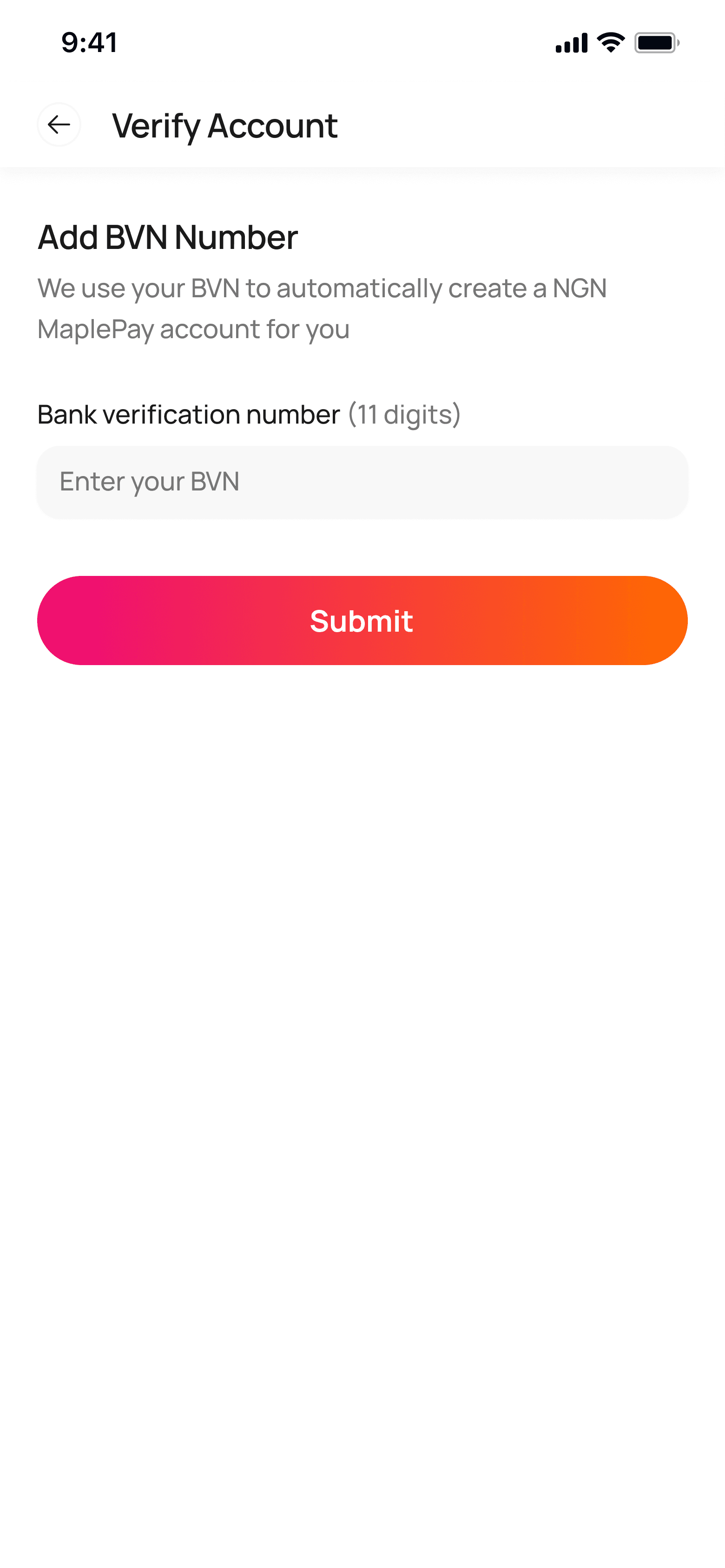
The product also needed to support identity verification, BVN requirements, payment integrations, transaction records, support workflows and future expansion into additional currencies.
The product documentation defines a broad MVP surface spanning onboarding, login/security, wallet management, exchange, funding, rewards, referrals, support, notifications and profile/settings.
The Challenge
The challenge was not simply to design a banking-style interface. Maple Pay had to connect several complex systems into one understandable customer journey.
A user could move from account creation into identity verification, create or access wallets, fund an account, convert currencies and complete a transfer — each with its own requirements, validation states and failure conditions.
The experience needed to feel simple on the surface without hiding the rules underneath.
How Might We
How might we make cross-border money movement feel as simple and trustworthy as using a local financial app while still supporting the complexity of a regulated multi-currency platform?
Design Principles
01
Reduce complexity
Turn multi-step financial requirements into clear, understandable actions.
02
Build trust at the point of decision
Surface rates, fees, verification requirements, balances and transaction states when users need them.
03
Design for the system, not just the screen
Make decisions that can scale across currencies, payment methods and future product expansion.
Building the experience as a system
Because Maple Pay spans multiple financial tasks, the experience needed a clear relationship between onboarding, wallets, funding, exchange, transactions and account management.
I used the broader product architecture to make sure individual flows felt connected rather than behaving like separate features.
MPExchange
Home
- Wallet balance
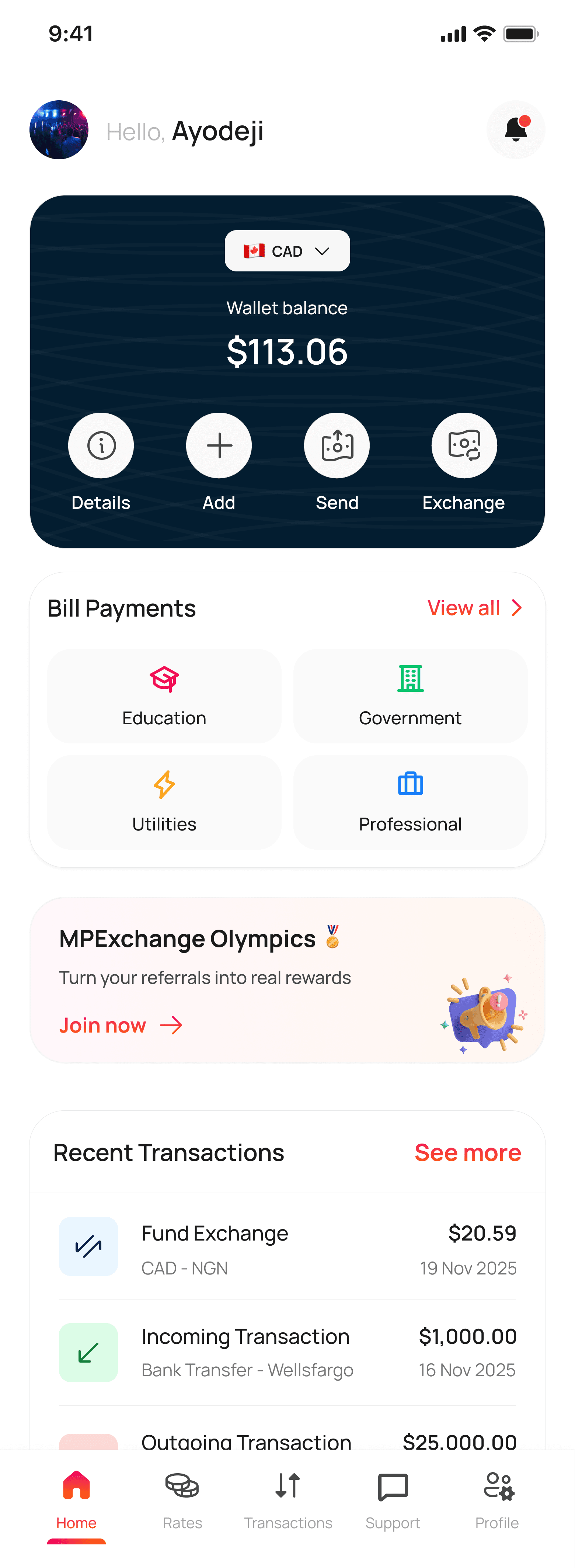
- Details, Add, Send, Exchange
- Bill payments
- Recent transactions
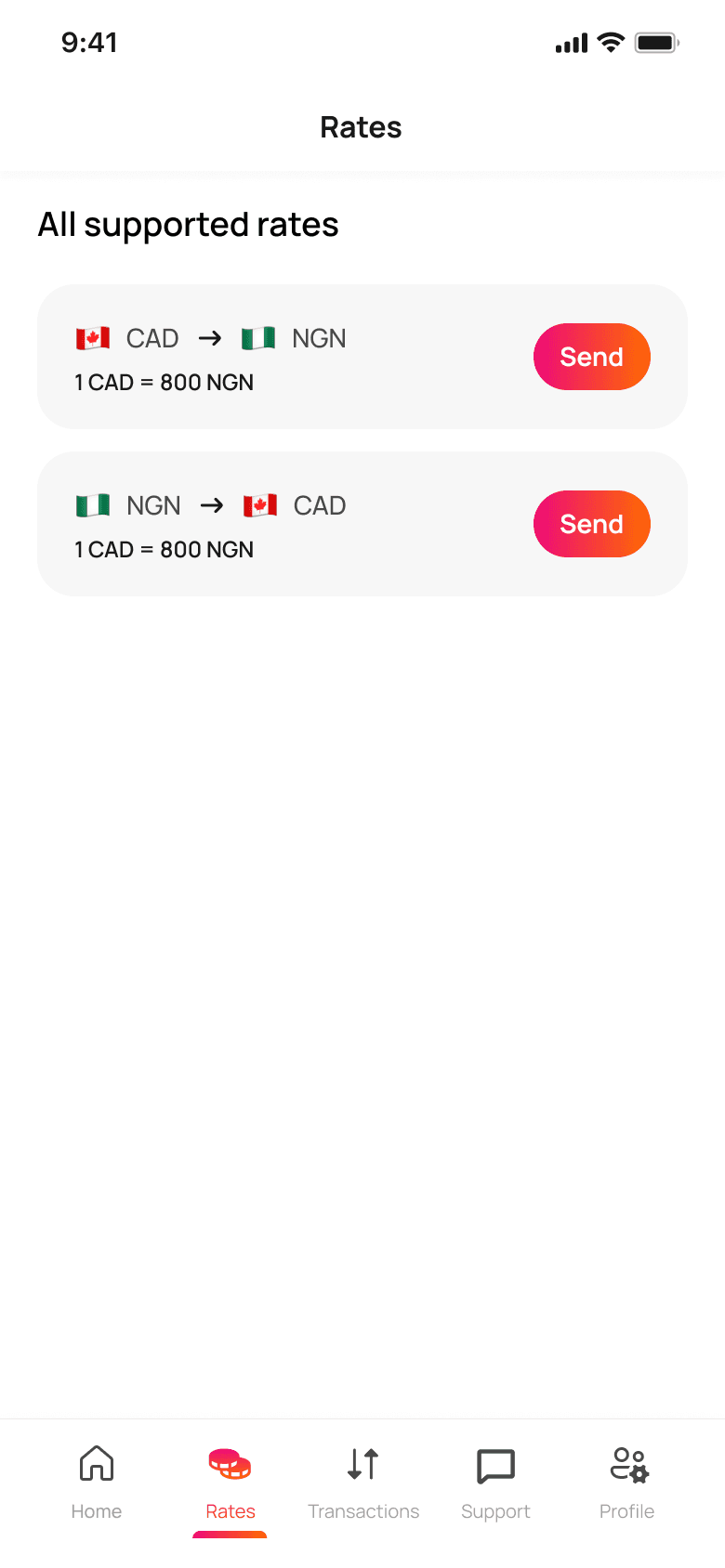
Rates
- Supported rates
- Send from a rate
Transactions
- Search and filter
- Exchange, incoming and outgoing
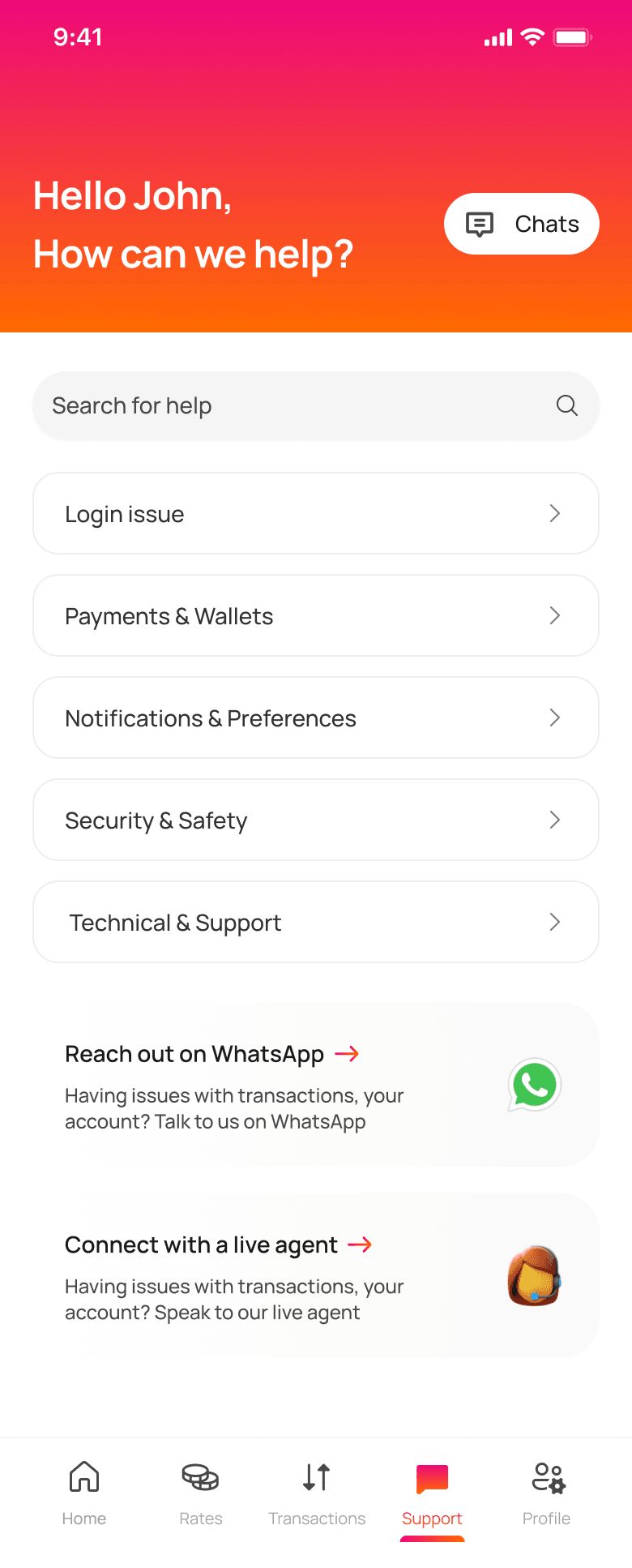
Support
- Help search
- Chat, WhatsApp, live agent
- Help topics
Profile
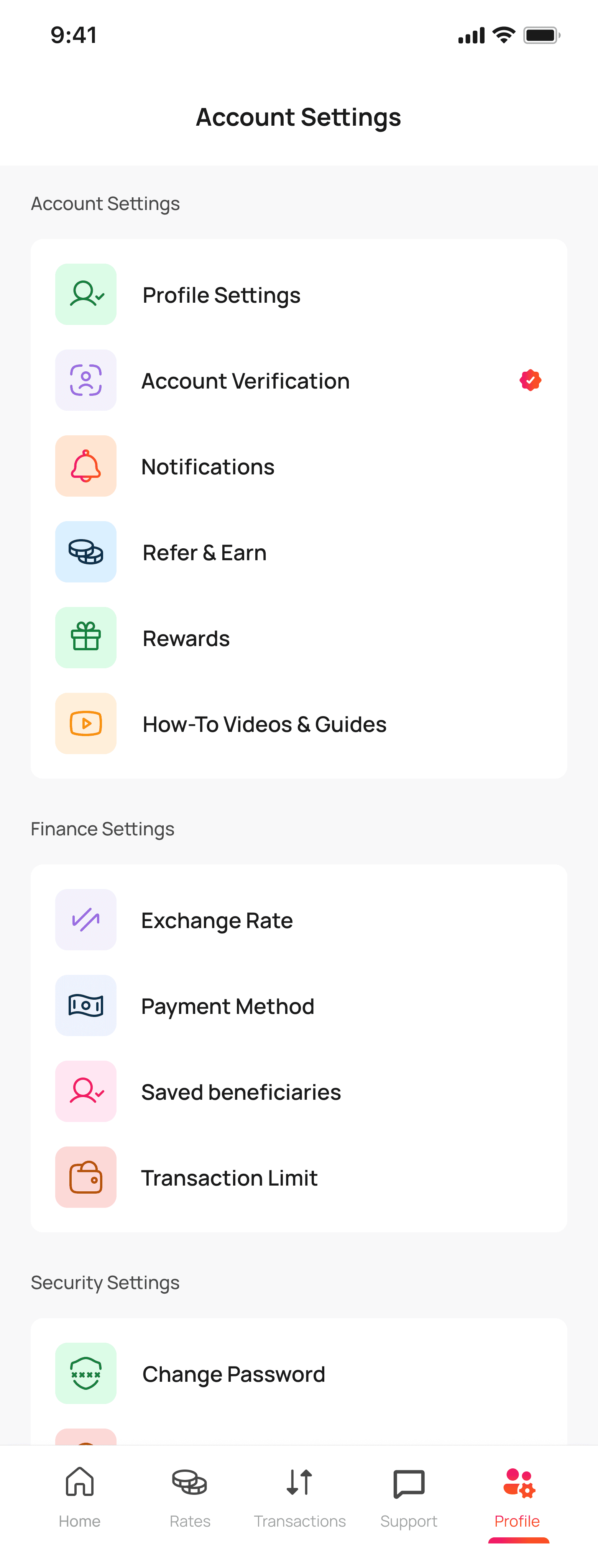
- Account settings
- Finance settings
- Security settings
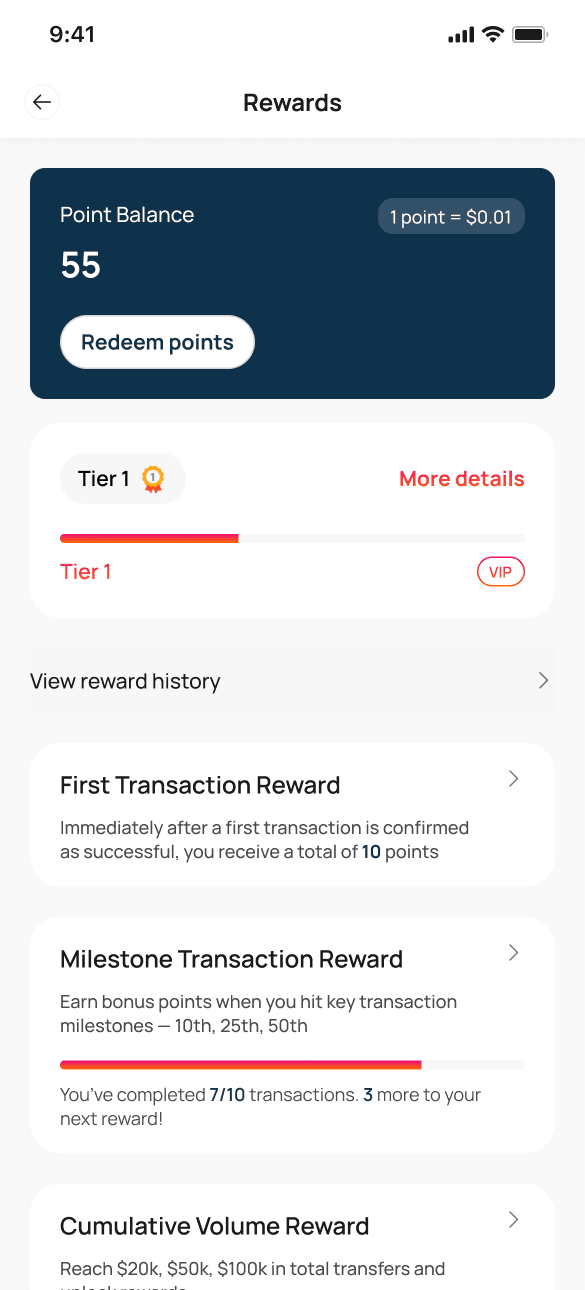
- Rewards and referrals
Designing the first 10 minutes of the product
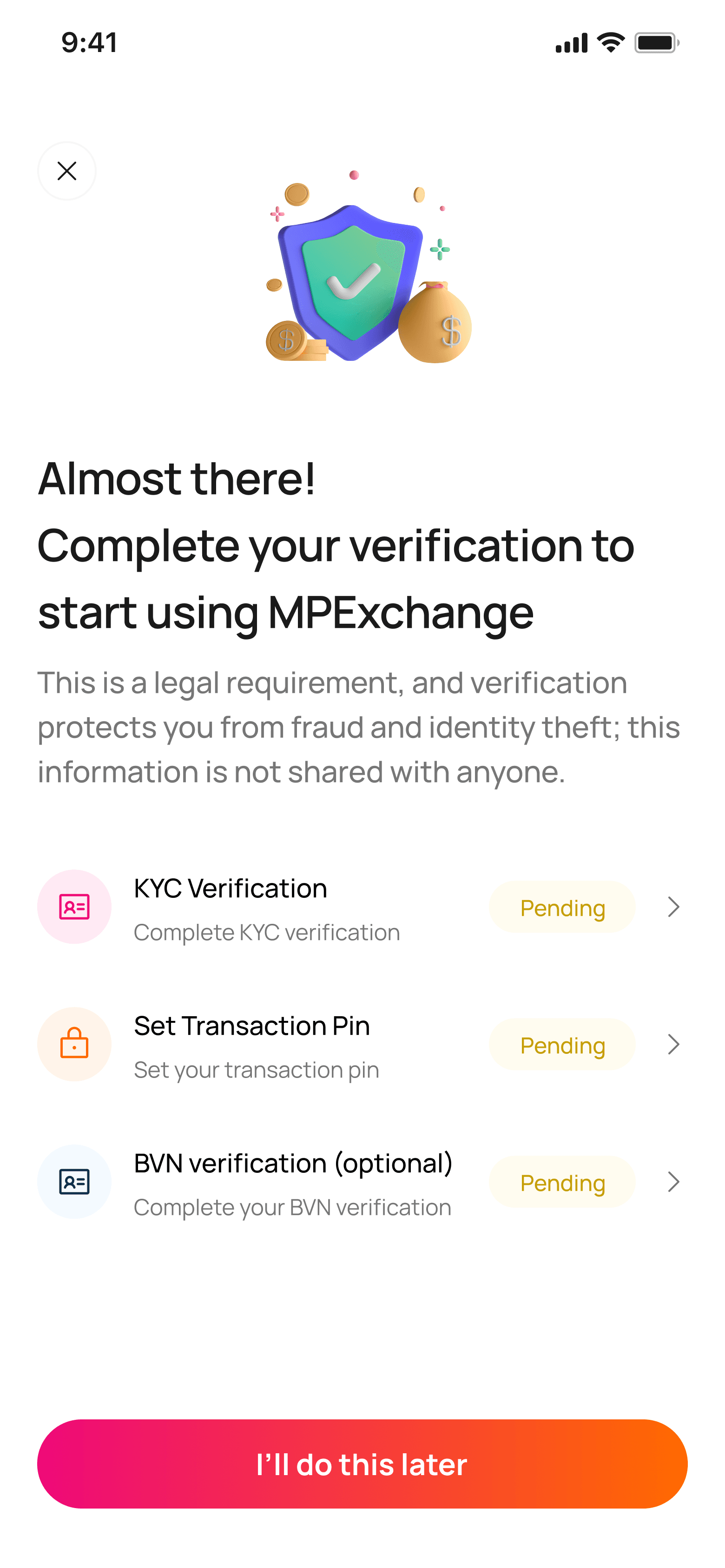
The first experience had to establish trust while collecting the information required to operate a regulated financial account. The onboarding flow moves through phone verification, email verification, personal details, password/security setup and profile tailoring before identity verification unlocks full access.
The brief also requires users to retain entered information when moving backward through the flow so they do not have to repeatedly re-enter data.
Designing the money movement system
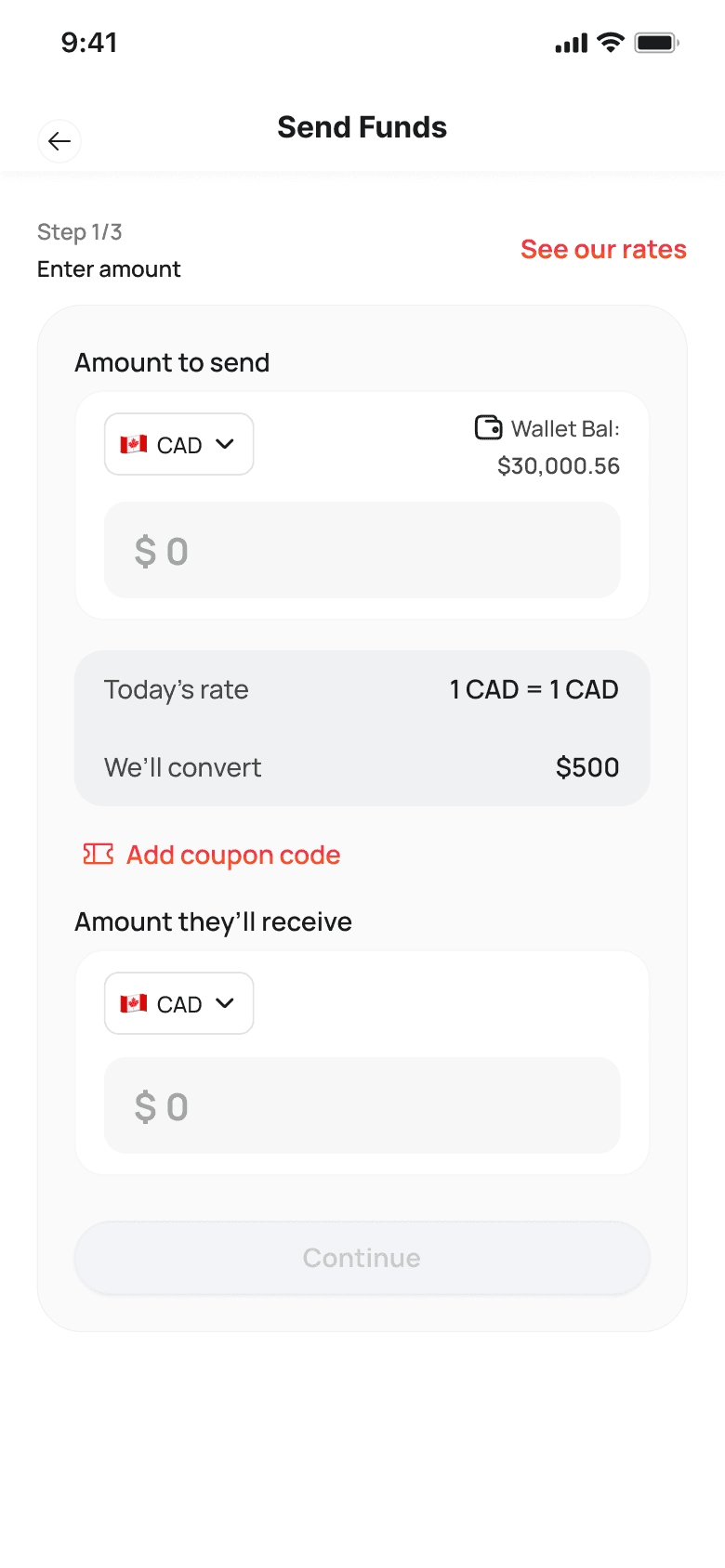
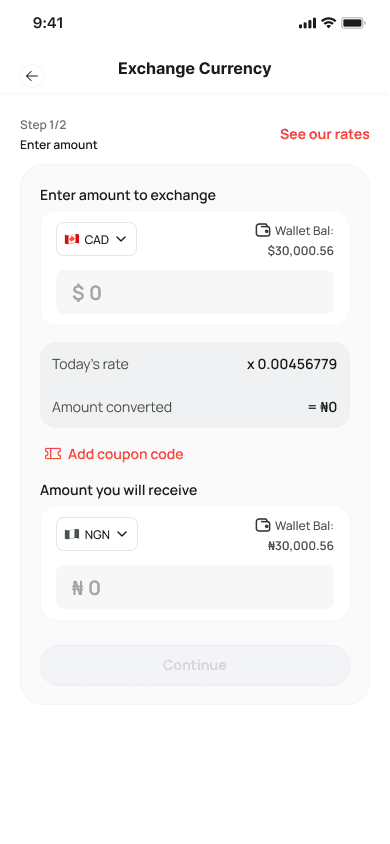
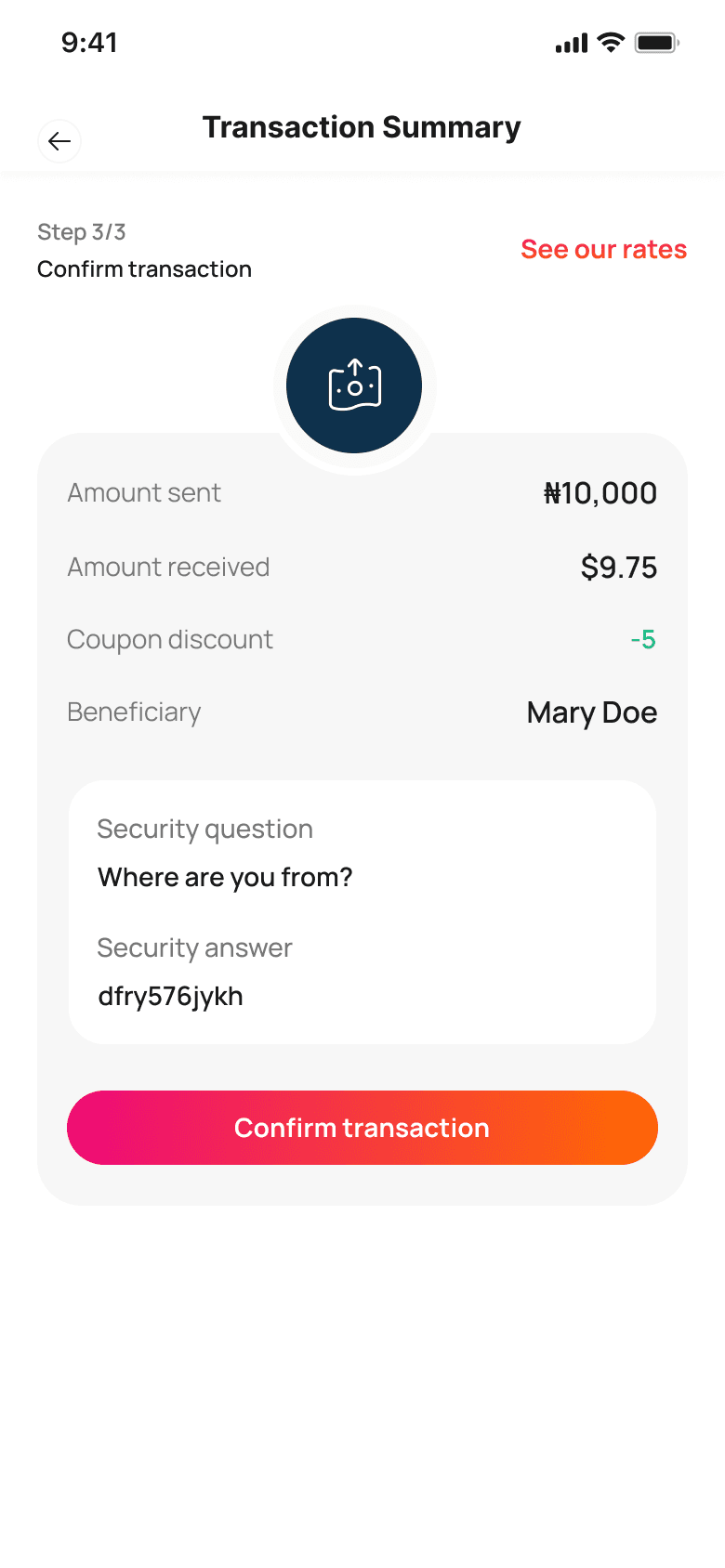
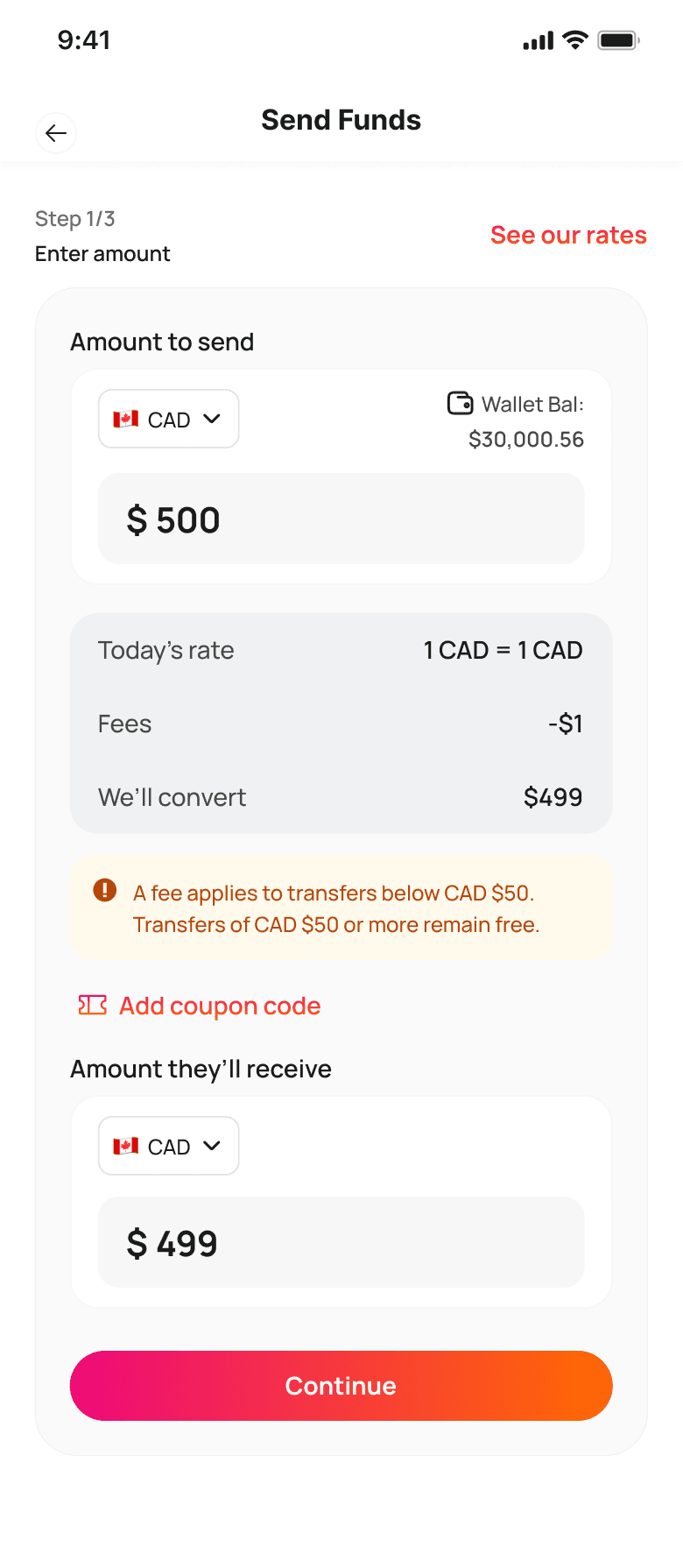
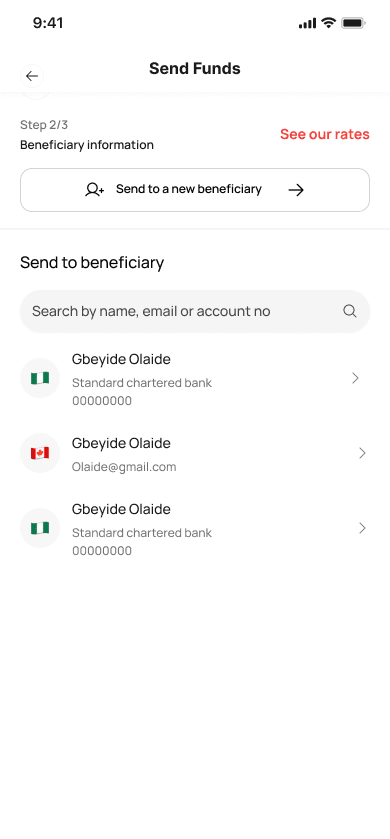
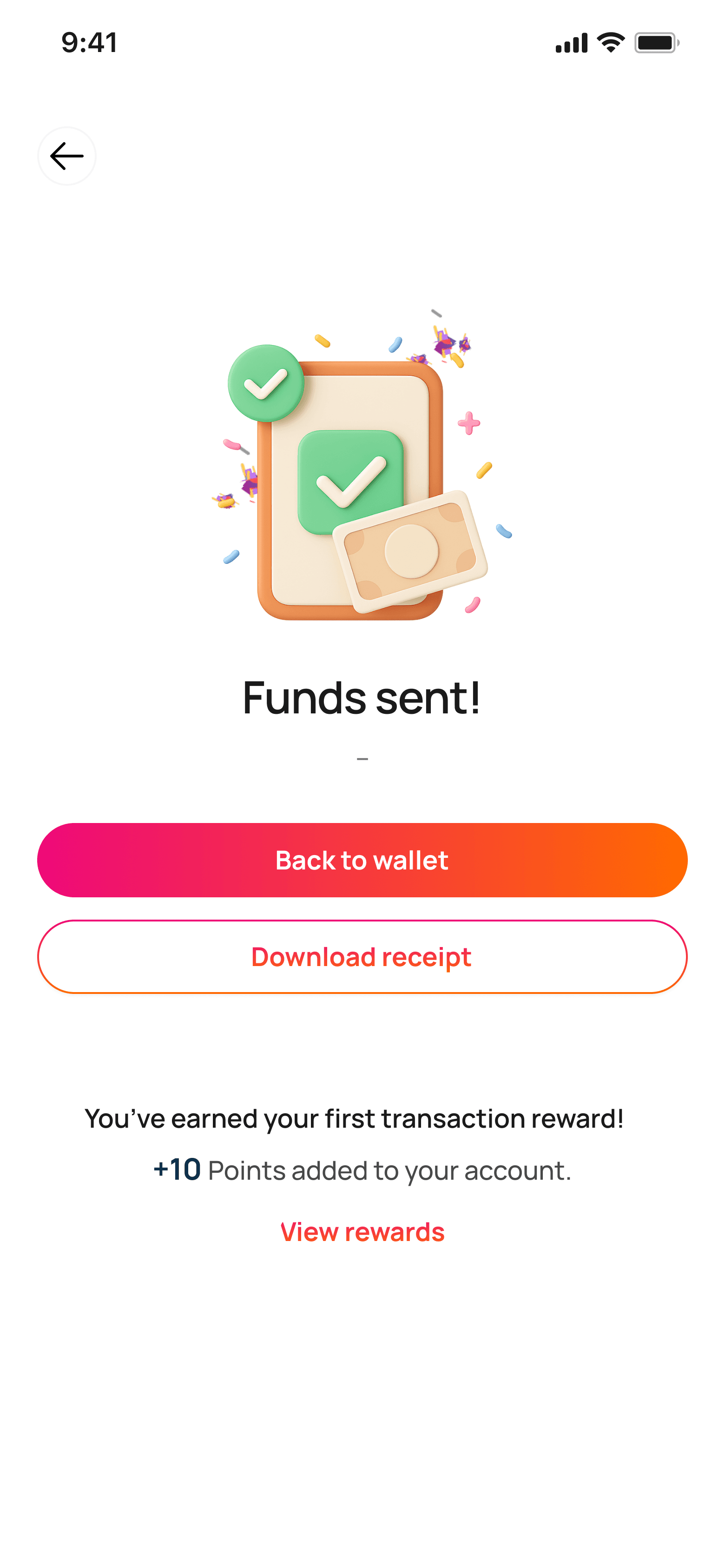
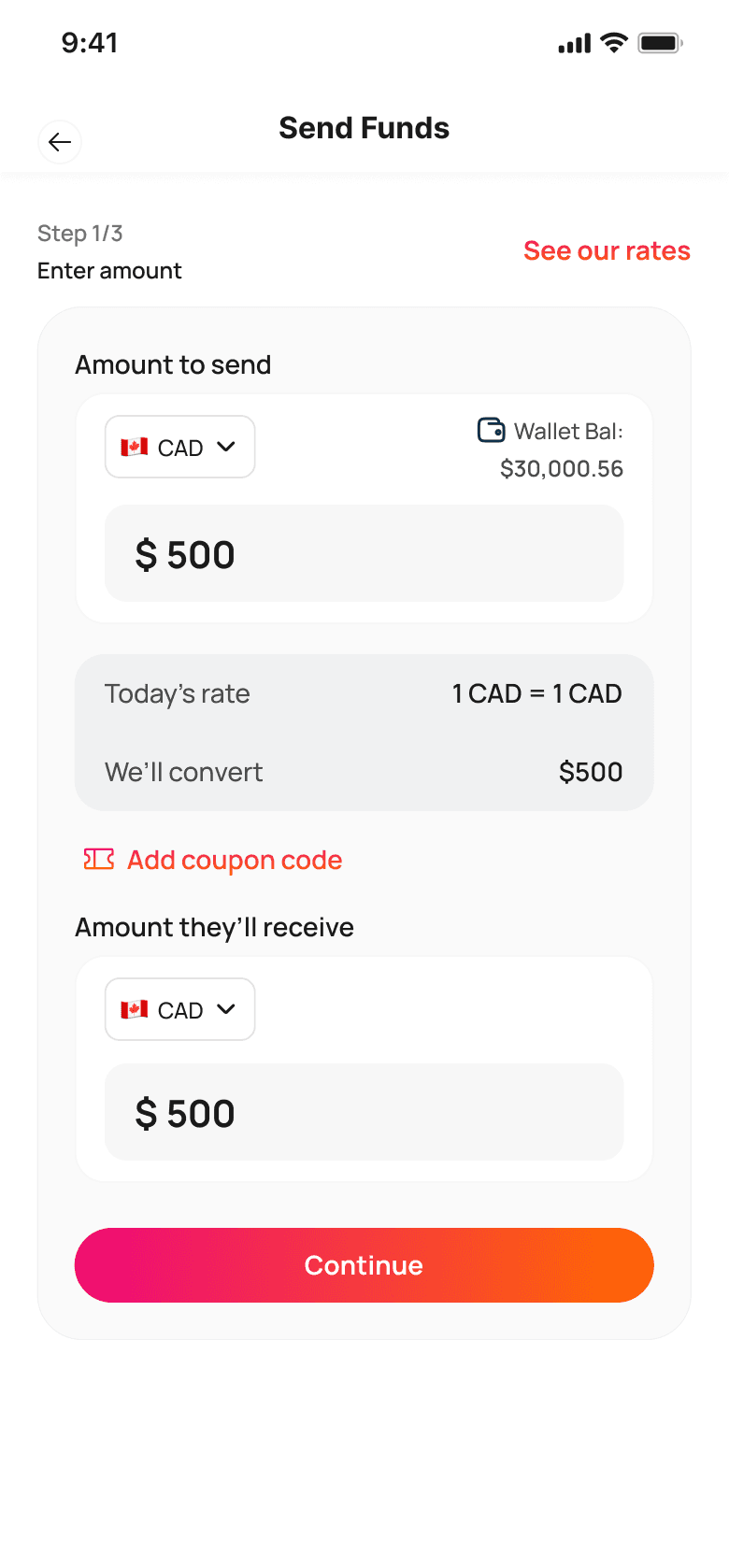
The core of Maple Pay is the movement of money between currencies, wallets and beneficiaries. I designed the experience around a clear sequence: know the balance, choose the currency, enter the amount, understand the rate and fee, select the destination, review the transaction and confirm.
Scroll sideways to see the full diagram →
Making the financial model understandable
The product needed to make the relationship between wallets, funding and exchange clear. Users could fund their CAD or NGN wallet, see their resulting balance and then use that balance for conversion or transfer.
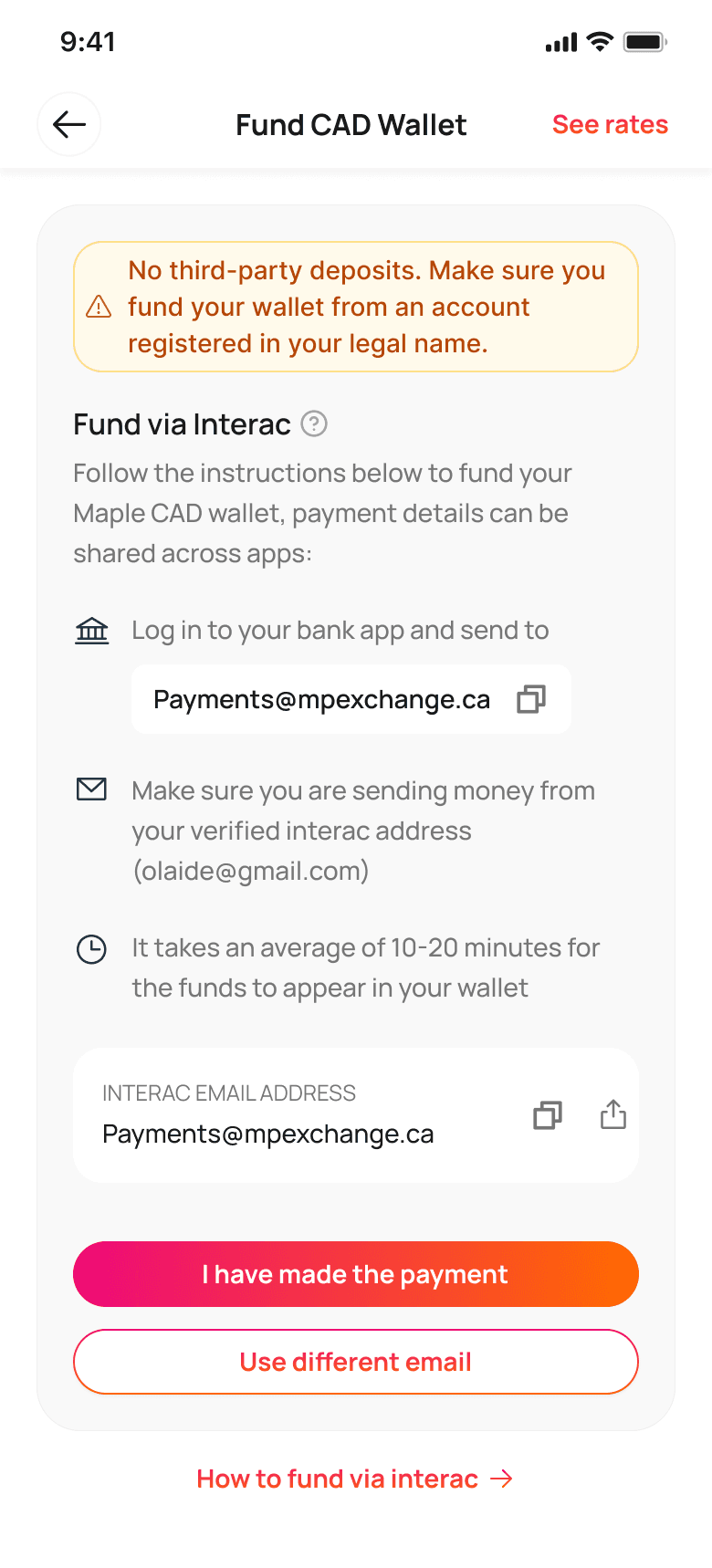
The documented funding flows include Interac-based CAD funding and bank-transfer funding for NGN, with source-name matching and wallet confirmation.
Building for more than two currencies
The product was designed with future currency expansion in mind. That meant the wallet experience couldn't assume that CAD and NGN would always be the only currencies a user could interact with.
The structure needed to support currency-specific verification, wallet creation and country representation without creating a completely different experience for every new market.
The product documentation explicitly supports creating multiple currency wallets, with country, currency and flag representations and currency-specific KYC requirements.
Making every transaction traceable
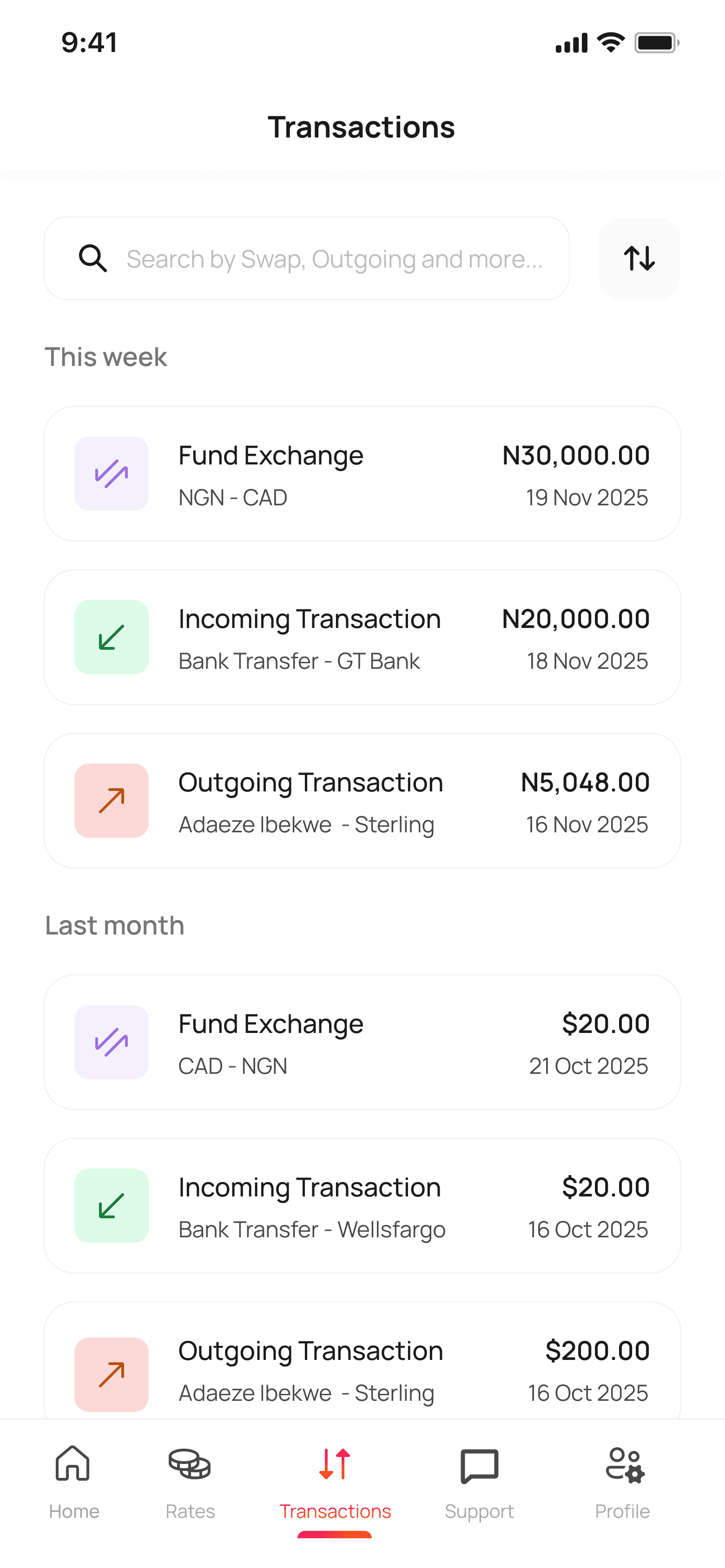
Financial transactions need more than a success screen. Users need a clear record of what happened, while support and operations teams need enough information to investigate issues.
The transaction experience therefore connected confirmation, receipts, transaction history and a unique transaction reference that could be used across customer and operational workflows.
The documentation defines transaction IDs as a common reference across receipts, user communication, audit logs and support/reconciliation.
Designing for what happens when things go wrong
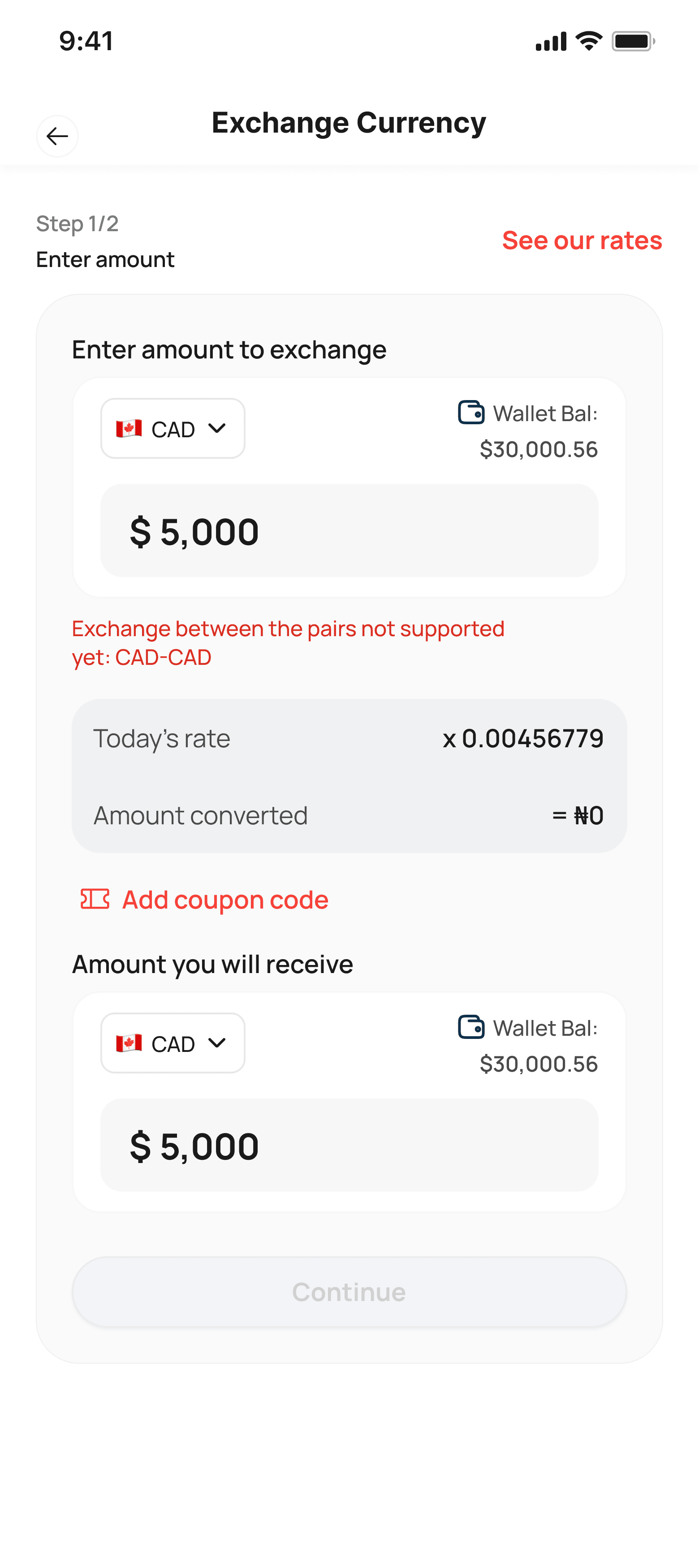
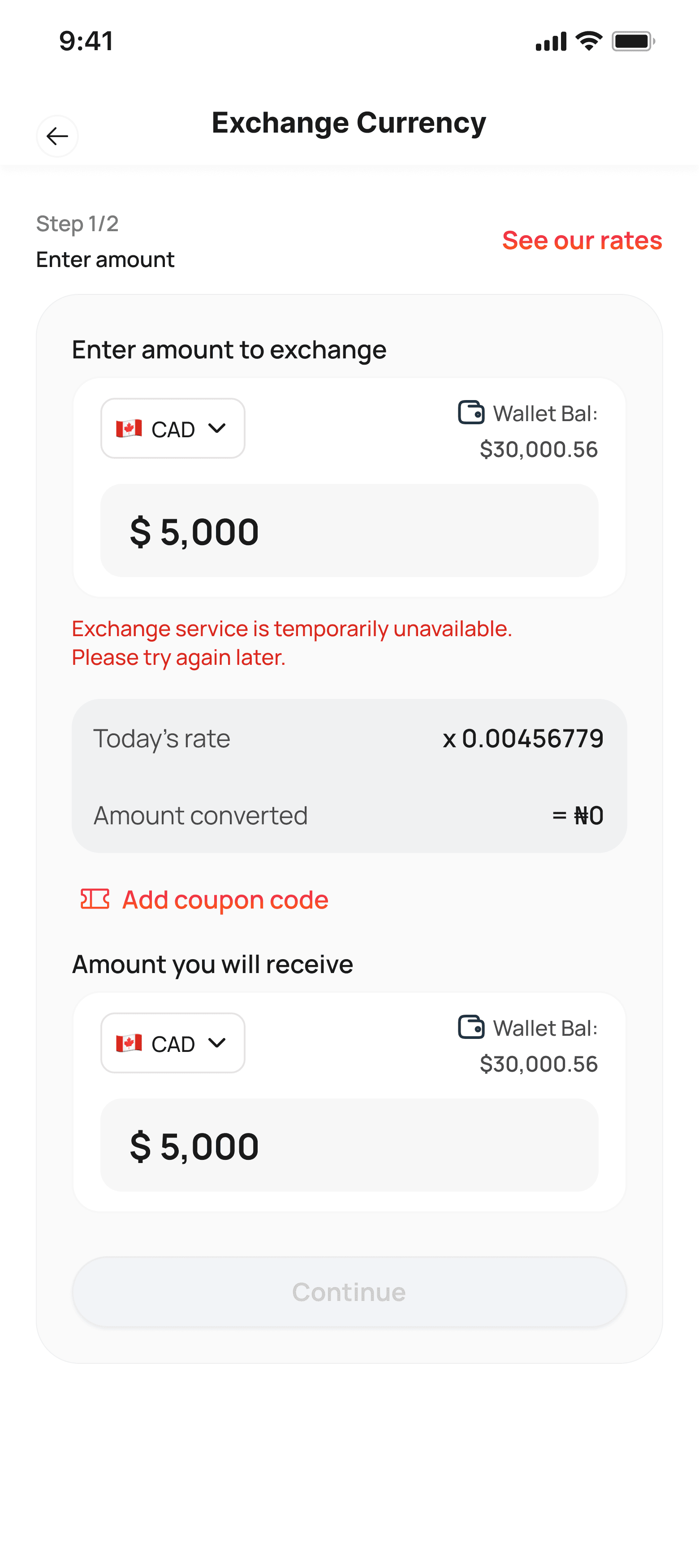
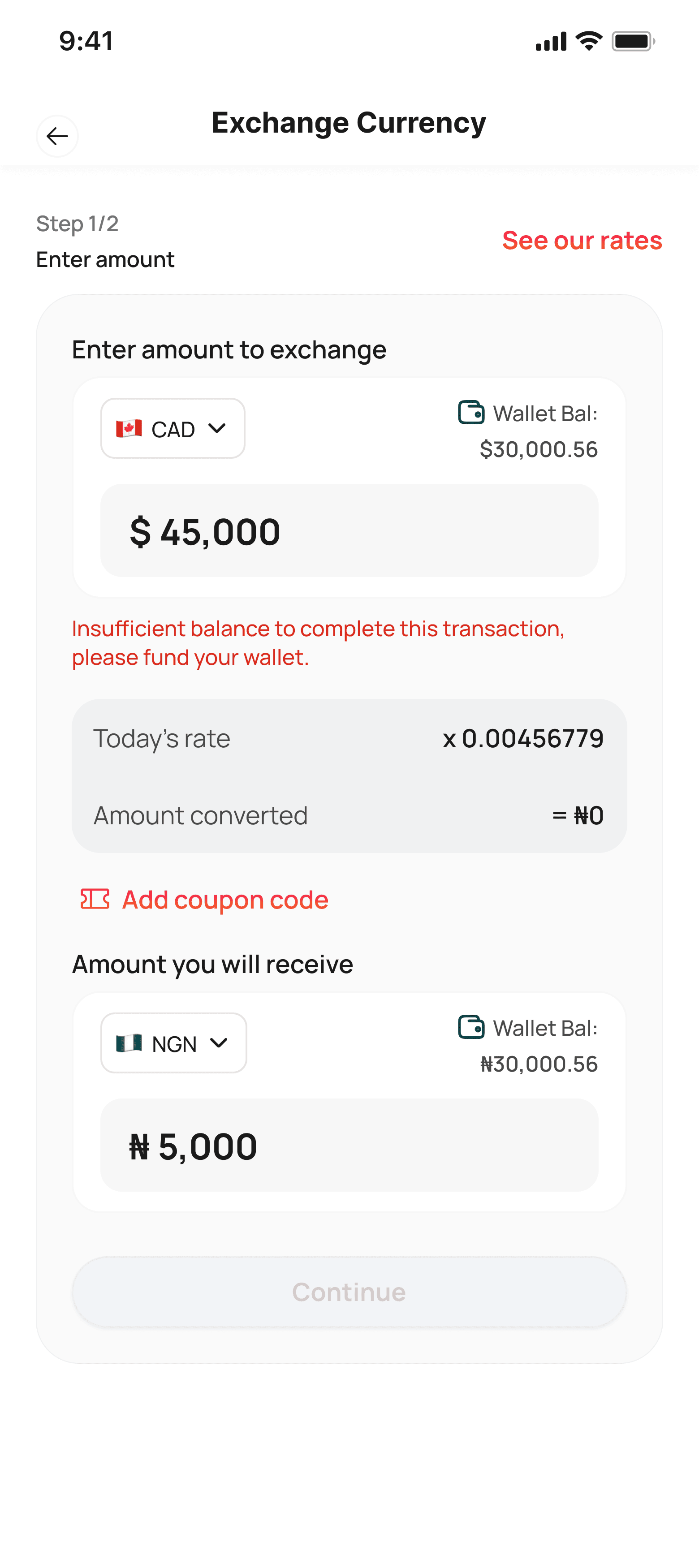
A cross-border financial product cannot rely on the happy path. I designed the experience around insufficient balances, unavailable rates, verification requirements and transactions that need additional review.
The documented exchange flow explicitly accounts for insufficient balance, unavailable exchange rates and compliance holds.
Decision
Keep financial context visible before confirmation.
Why
Users should understand the amount, rate, fee and receiving value before they commit to a financial transaction.
Designing with product and engineering
The product required close collaboration because many UX decisions depended on how the underlying financial rules worked. I used product requirements, system constraints and engineering feedback to refine the experience instead of designing the interface in isolation.
Iteration
The experience evolved through refinement of information hierarchy, transaction states, verification requirements and the relationship between wallets, funding and exchange.
Impact
The work established a clearer customer experience for a cross-border financial product and created a foundation that could support money movement, multi-currency wallets, verification and future product expansion as one connected system.
What I learned
Designing a financial product from the ground up changed how I think about complexity. The difficult part is rarely the screen itself; it is understanding how rules, states, systems and user expectations connect across the journey.
This project strengthened my ability to design across an entire financial ecosystem rather than treating each flow as an isolated feature.
Try it yourself